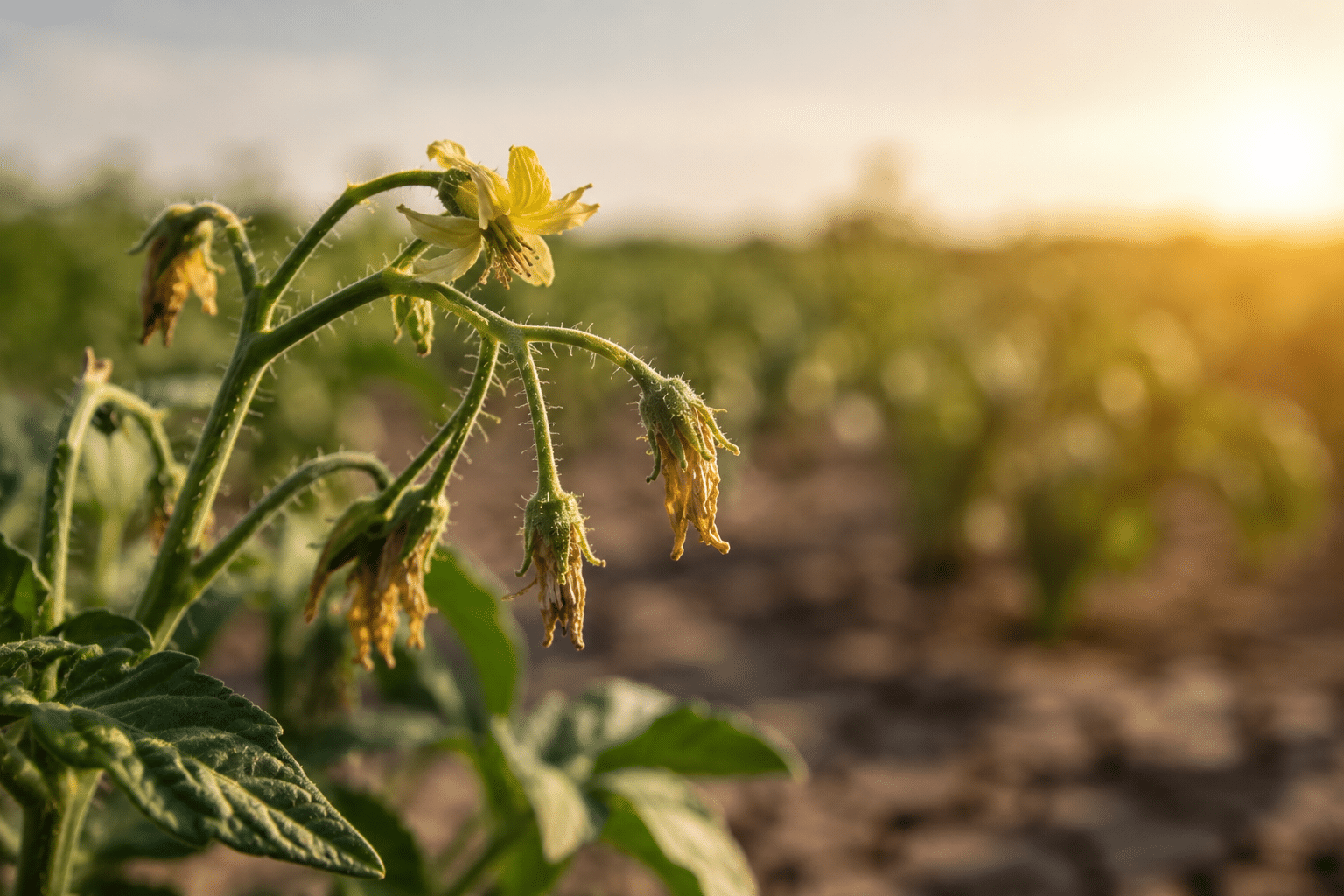
Rice: Strengthening Resilience to Water and Heat Stress
Rice is one of the world’s most important staple crops, feeding more than half of the global population. However, climate change is increasing the frequency and intensity of extreme weather events, exposing rice crops to simultaneous episodes of drought and high temperatures.
These combined abiotic stresses represent one of the greatest threats to rice productivity. Rather than acting independently, water deficit and heat stress often reinforce each other, significantly reducing plant performance and ultimately affecting grain yield and quality.
Developing more resilient production systems has therefore become essential. Through innovative agronomic approaches inspired by nature, farmers can better protect crop performance while promoting sustainable rice production.
Why combined water and heat stress is becoming a major challenge for rice production?
Traditionally, rice cultivation has relied on abundant water availability. However, changing rainfall patterns, increasing water scarcity and prolonged heatwaves are challenging this production model across many rice-growing regions.
High temperatures increase plant transpiration while simultaneously accelerating soil water depletion. As water becomes limiting, plants struggle to regulate their internal temperature, creating a vicious cycle of physiological stress.
The combination of these factors often has a much greater impact than either stress occurring alone.
How water and temperature stress affect rice physiology?
Rice plants depend on a delicate physiological balance throughout their growth cycle. Combined stress disrupts multiple metabolic processes essential for growth and grain development.
Reduced photosynthesis and energy production
Water deficit causes stomata to close in order to reduce water loss. While this mechanism helps conserve moisture, it also limits carbon dioxide uptake, reducing photosynthetic activity.
At the same time, excessive temperatures damage photosynthetic enzymes and chloroplast function, further decreasing the plant’s capacity to produce the energy required for biomass accumulation and grain filling.
The result is slower growth and lower productivity.
Reproductive stages are particularly vulnerable
The flowering period is among the most sensitive stages of rice development.
Heat stress can reduce pollen viability, impair fertilisation and increase spikelet sterility. If drought occurs simultaneously, these effects become even more pronounced, leading to significant yield losses.
Protecting plant physiological functions during reproduction is therefore critical to preserving yield potential.
Accelerated plant senescence
Combined stress also increases the production of reactive oxygen species (ROS), creating oxidative stress within plant tissues.
This accelerates leaf ageing, reduces nutrient remobilisation and shortens the grain-filling period, directly affecting both yield and grain quality.
Maintaining plant vitality throughout the crop cycle becomes a key objective under increasingly variable climatic conditions.
Agronomic strategies to strengthen rice resilience
Although climatic conditions cannot be controlled, several agronomic practices can significantly improve the ability of rice crops to withstand environmental stress.
Optimising soil health

Healthy soils with good structure and high biological activity improve water infiltration, storage and availability to plants.
Enhancing soil fertility and supporting microbial activity also contributes to stronger root development, allowing plants to access water more efficiently during dry periods.
Improving soil health therefore represents the first line of defence against climatic stress.
Balanced plant nutrition
Efficient nutrient management plays a major role in helping rice plants maintain physiological activity under adverse conditions.
Balanced nutrition supports:
- stronger root systems;
- improved water-use efficiency;
- enhanced photosynthetic capacity;
- better metabolic regulation;
- increased tolerance to oxidative stress.
Providing nutrients according to crop demand contributes to maintaining plant performance throughout the growing season.
Supporting plant physiological activity
Modern agronomic approaches increasingly focus on enhancing the plant’s natural physiological mechanisms.
By stimulating nutrient assimilation, improving metabolic efficiency and supporting stress-response pathways, innovative nutritional technologies can help plants remain active during periods of environmental pressure.
This contributes to preserving both crop development and final yield.
Adapting crop management practices
Integrated crop management further strengthens resilience.
Effective practices include:
- optimising irrigation scheduling;
- selecting locally adapted varieties;
- improving water management efficiency;
- maintaining soil organic matter;
- monitoring crop development to anticipate stress periods.
Combining these practices allows farmers to reduce production risks while improving long-term sustainability.
Building resilient rice systems for the future
The combination of water deficit and high temperatures is becoming one of the defining challenges for modern rice production.
Protecting yield potential requires more than responding to individual stress events. It demands an integrated agronomic strategy that combines healthy soils, balanced nutrition, innovative technologies and sustainable crop management.
Inspired by nature and driven by scientific innovation, TIMAC AGRO supports farmers in building more resilient rice production systems capable of meeting the challenges of tomorrow while contributing to a more sustainable agriculture.

Frequently Asked Questions
How does heat stress affect rice yield?
High temperatures reduce photosynthesis, impair pollen viability, increase spikelet sterility and shorten grain filling, all of which contribute to lower yields.
Why are water and heat stress more damaging when combined?
Drought limits the plant’s ability to cool itself through transpiration, making heat damage even more severe and intensifying physiological stress.
Which growth stage is most sensitive to combined stress?
Flowering and early grain filling are the most critical stages, as reproductive processes are highly sensitive to both drought and elevated temperatures.
How can farmers improve rice resilience to climate stress?
Healthy soils, balanced crop nutrition, efficient irrigation, adapted crop management and innovative agronomic solutions all contribute to improving crop resilience.