Heat stress in dairy cows: a growing challenge for farms
Why dairy cows are highly sensitive to heat stress ?
Heat stress is now a major and lasting constraint for dairy farming systems. Dairy cows are particularly sensitive to temperature variations, and even moderately warm conditions can disrupt their physiological balance.
The thermal comfort zone of dairy cows is relatively narrow, generally between 2°C and 20°C depending on references. From 15°C, animals begin to activate adaptation mechanisms, and from 22°C, their ability to dissipate heat becomes limited, leading to an increase in body temperature and stress levels.
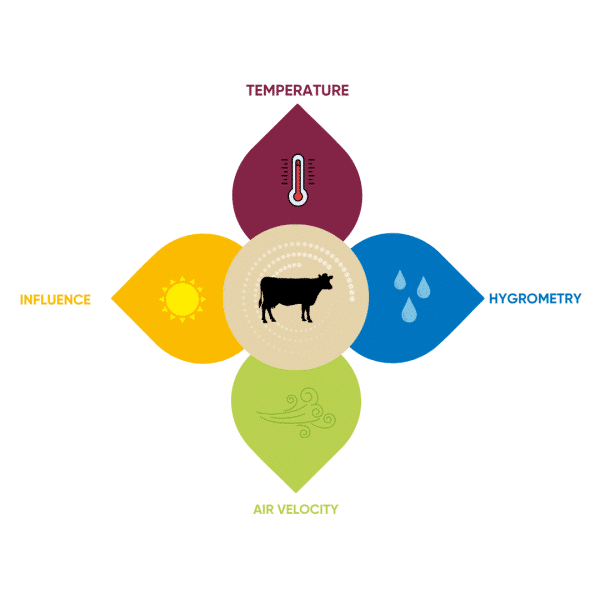
Temperature alone is not sufficient to assess the risk. Humidity, air velocity and solar radiation strongly influence the temperature perceived by the animal. These interactions explain why heat stress can occur even under seemingly moderate climatic conditions.
In Europe, heat episodes are becoming increasingly frequent and prolonged, with direct consequences on animal welfare and zootechnical performance.
Measuring heat stress to better anticipate
Assessing heat stress is a key lever for adapting livestock management practices.
The THI (Temperature Humidity Index) is commonly used as an alert indicator. A value above 68, corresponding for example to 22°C with 50% humidity, already indicates a situation of mild heat stress in dairy cows.

However, this index has its limitations, as it does not take into account air speed or solar radiation. More comprehensive indicators such as the HLI (Heat Load Index) incorporate these parameters and provide a more accurate assessment of the animals’ thermal perception, particularly in housing conditions.
In practice, combining these climatic indicators with animal observation, such as panting, reduced feed intake or behavioural changes, allows for a more precise diagnosis.
Major physiological and behavioural changes
Major physiological and behavioural changes
Heat stress leads to significant adaptations in cows’ physiological functioning. They reduce their feed intake and rumination activity, which decreases saliva production and increases the risk of ruminal acidosis. They spend more time standing, reduce their movements and tend to group together in the coolest areas.
Respiratory rate is also a key indicator. Under normal conditions, it remains below 60 breaths per minute, but can reach up to 150 breaths per minute in cases of severe heat stress.

These adaptations help limit the increase in body temperature but come at the expense of performance, health and animal welfare.
Direct economic impacts on milk production
Heat stress quickly results in a decrease in production, mainly due to reduced feed intake and lower metabolic efficiency.
Milk losses can reach between 1 and 4 kg per cow per day and are often associated with a decline in milk quality. A decrease in protein and fat content, along with an increase in somatic cell count, can be observed, directly affecting milk value.

At the same time, declining reproductive performance and increased health risks generate additional costs. At herd level, prolonged heat episodes have a significant impact on farm profitability.
Significant impacts on reproduction and health
Heat stress has a major effect on reproduction, often underestimated in livestock systems.
Hormonal imbalances, energy deficits and oxidative stress impair oocyte quality and embryonic viability. This results in lower insemination success rates, increased embryonic mortality and longer calving intervals.
In parallel, metabolic disorders become more frequent. The increased risk of acidosis promotes the occurrence of lameness and laminitis, while weakened immunity makes animals more susceptible to diseases.
All categories of animals are affected, with potential consequences on overall herd performance in the medium and long term.
Anticipating heat stress to secure overall performance
Heat stress must now be considered as a structural factor in dairy farm management. Its effects go beyond short-term production losses and impact all technical and economic performance indicators.
Nutrition is a strategic lever to support animals during periods of heat stress and secure performance. The objective is to compensate for reduced feed intake while supporting metabolic functions. Adapted nutritional strategies help stabilize rumen pH, limit oxidative stress and strengthen immune defenses. They also contribute to maintaining rumen balance despite reduced rumination, supporting fertility through improved metabolic balance and compensating for losses in electrolytes and trace elements.
These approaches are essential to preserve production and animal health under heat stress conditions. Anticipation, starting in spring, combined with close animal monitoring and an adapted nutritional strategy, is a key lever to mitigate impacts. Through its expertise in nutrition and metabolic balance management, TIMAC AGRO supports farmers in implementing effective solutions that combine performance, sustainability and animal welfare.