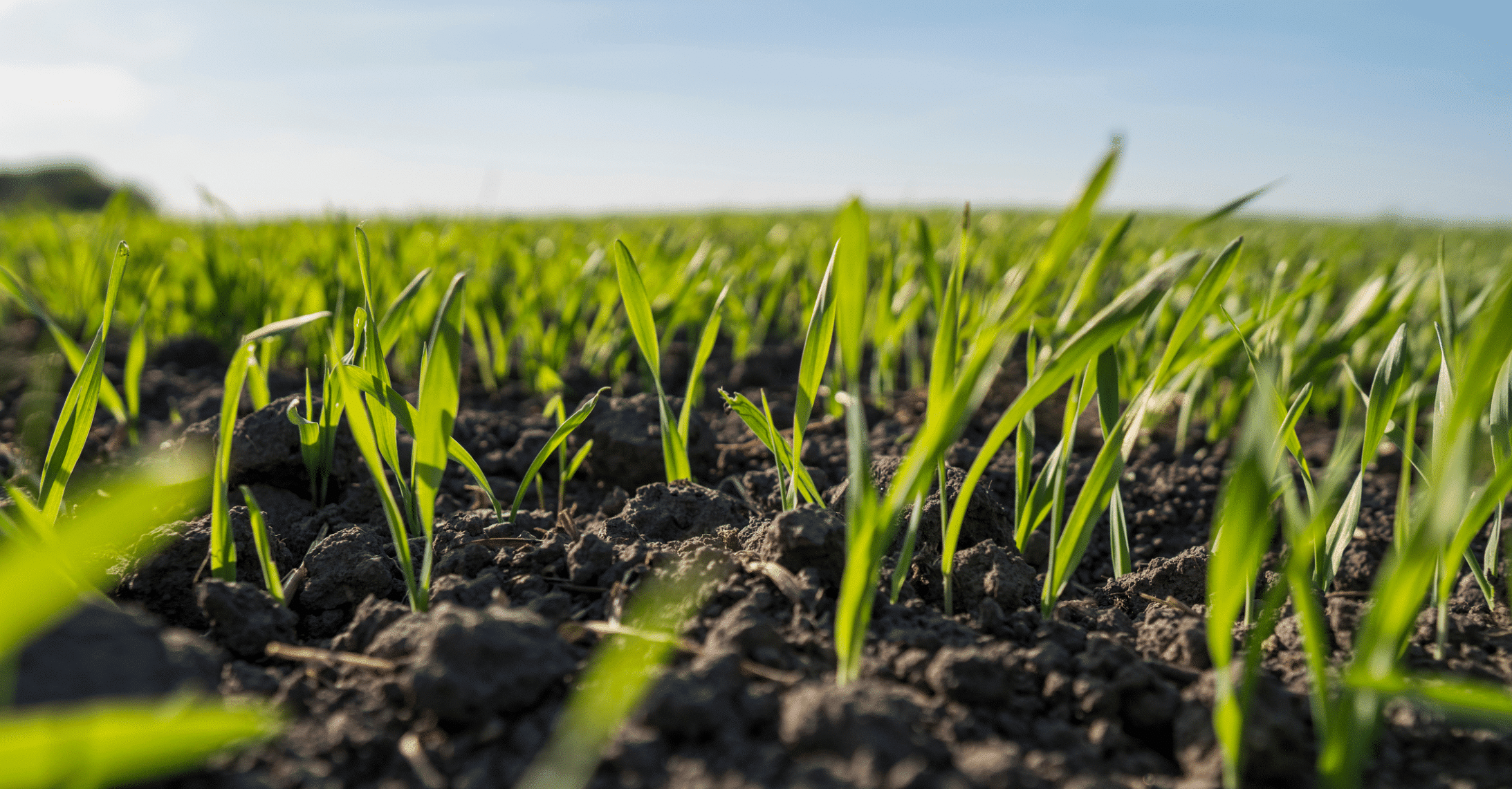
Grassland reseeding: accelerating establishment to secure early yield and profitability
Reseeding a grassland is a major technical and economic decision. With an average cost of around 600 €/ha depending on seed type and soil preparation, farmers expect rapid establishment, strong biomass production and a high-quality first silage cut. Securing grassland establishment is therefore not only an agronomic objective, but also a key profitability driver.
Why grassland establishment speed determines return on investment
The first silage cut largely conditions the economic performance of a reseeded pasture. Differences in dry matter yield at first cut can significantly impact the cost per tonne of silage, with variations reaching up to 60 €/t of dry matter depending on yield level.
A slow establishment delays the first grazing or silage opportunity and increases exposure to weeds. Conversely, rapid grass establishment improves early dry matter yield, forage quality, stand density and competitiveness, as well as long-term grassland persistence.
For farmers searching for solutions to improve grassland productivity, focusing on early biomass accumulation and uniform emergence is essential.
Key factors influencing grass establishment after reseeding
Spring and late summer are generally preferred periods for grass reseeding. Moderate temperatures and adequate rainfall promote seed germination and early root growth.
Insufficient soil moisture or excessive heat can slow emergence, reduce plant density and compromise the success of the new ley.

Choice of species and competitiveness
Species selection strongly affects establishment speed. Fast-growing species such as Italian ryegrass establish quickly, while others like fescue develop more slowly and may be less competitive against weeds.
When establishment is delayed, undesirable species can colonise the field, reducing forage quality and shortening grassland lifespan. For farmers looking to improve pasture renovation success, species choice must be aligned with local conditions and production goals.
Plant physiological activity and early nutrition
Rapid germination and active root development directly influence biomass production. Water and light are essential to support hormone production and early plant growth.
Optimising early nutrition near the seed zone enhances seedling vigour, promotes uniform emergence and accelerates canopy closure. This is a decisive lever to improve grassland establishment and limit weed pressure.
Root development: the foundation of grassland productivity
A strong and well-developed root system is central to both establishment and regrowth. After cutting or grazing, grasses mobilise energy reserves stored in their roots to restart shoot growth.
The relationship between initial root energy and shoot dry matter production clearly shows that higher root reserves support stronger regrowth.
For farmers aiming to improve grass regrowth after silage or grazing, investing in root development from the earliest stages is essential. A robust root system also contributes to better nutrient uptake, improved drought tolerance and enhanced grassland longevity.
Supporting early grass growth with targeted microgranule technology
Positioning specific nutritional solutions close to the seed at sowing can stimulate root growth and accelerate young plant development. Trial results have shown increases in establishment speed and yield compared to untreated plots.
Additional demo results reported an average yield increase of 0.5 t DM/ha, confirming the importance of optimised early nutrition in grassland reseeding strategies.
By combining appropriate species choice, adapted sowing conditions and targeted starter fertilisation, farmers can secure grass establishment, increase first cut yield and improve the overall profitability of their pasture renovation.