Preparing ruminants for the transition to spring grazing
A key phase in the food cycle of ruminants
The arrival of spring marks a major change in the diet of ruminants. After several months of winter rations distributed indoors, turning out to pasture brings about a rapid change in the environment and nutritional intake. This transition is a period of physiological stress for the animal, during which the rumen is put under considerable strain.
Young spring grass is characterized by a high water content, soluble sugars, and rapidly fermentable nitrogen. This composition promotes accelerated digestive transit and can cause disorders such as diarrhea or reduced feed intake. It also alters mineral balances, notably by decreasing the magnesium/potassium ratio, which can limit the assimilation of certain essential trace elements.
Excess soluble nitrogen, a factor in ruminal imbalance
At the beginning of grazing, the soluble nitrogen content of grass can be significantly higher than that of more mature forage. This massive influx of readily available nitrogen disrupts the balance of the rumen flora and promotes ammonia production.
When this ammonia is not properly utilized by rumen microorganisms, it accumulates and must be converted by the liver into urea, at a significant energy cost to the animal. These imbalances can result in liver overload, increased nitrogen losses, and repercussions on overall health. The consequences observed include reproductive disorders, increased urea in milk, increased susceptibility to mastitis, and deterioration in body condition.
Laying the foundations for gradual grazing
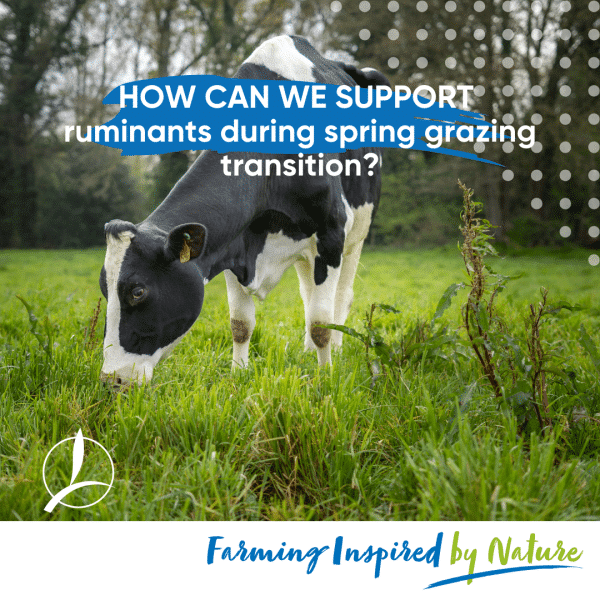
The success of the transition to grazing depends largely on rigorous pasture management. The start must be made on sufficiently developed grass, with an appropriate height, good soil bearing capacity, and controlled grazing pressure to avoid overgrazing and excessive ingestion of very young grass.
At the herd level, a gradual dietary transition phase is essential. A gradual introduction to grazing, initially limited to a few hours per day, allows the rumen to adapt to new fermentable substrates. Maintaining an effective fiber intake, via hay or straw available for self-service, helps stabilize ruminal pH and ensure safe ingestion.
Supporting the adaptation of ruminal flora
The transition to grass profoundly alters microbial activity in the rumen. To optimize the utilization of grass proteins, it is essential to promote good synchronization between available nitrogen and fermentable energy. A balanced ruminal flora helps limit ammonia spikes, improve microbial protein synthesis, and support feed efficiency.
This gradual adaptation of the microflora determines the animal’s ability to take full advantage of the nutritional richness of spring pastures, while limiting the risk of digestive or metabolic disorders.
Ensuring mineral and metabolic balance
Grazing places high demands on the metabolic, immune, and reproductive functions of ruminants. Young grass, although nutritionally rich, can be deficient in minerals and trace elements. Paying particular attention to magnesium, phosphorus, and micronutrient intake helps limit the risk of hypomagnesemia, supports enzyme activity, and supports increased production or growth.
An appropriate mineral balance also contributes to maintaining fertility, resistance to infection, and stable performance at the start of the season.
Sustainably enhancing the potential of spring grasslands
A controlled transition to spring grazing allows for optimal grass utilization, animal welfare, and zootechnical performance. By anticipating dietary changes, preparing the rumen, and supporting the animals’ gradual adaptation, the farmer ensures a smooth start to the season and lays the foundation for sustainable herd management throughout the year.